
New Paragraph
What Happens During an In‑Home Window Treatment Consultation?
February 10, 2026
If you've been thinking about updating your window treatments, you may have wondered what an in‑home consultation actually involves.
Many homeowners hesitate to schedule one because they're unsure what to expect. Will it feel sales‑driven? Do you need to have everything figured out ahead of time? Is your home "ready" for a visit?
Let's break down the essential parts of a window treatment consultation so you know what to expect.
Why an In‑Home Consultation Matters
Every home, and every window, is different.
Photos and online inspiration can only go so far. An in‑home consultation allows a window treatment specialist to see your space exactly as it is, including natural light, ceiling height, architectural details, and how each room is used day to day.
This in‑person approach helps avoid common issues like improper sizing, mismatched styles, or treatments that don't perform as expected. It's the best way to ensure your window treatments are not only beautiful, but functional and long‑lasting.
Step One: Getting to Know You and Your Space
The consultation typically begins with a conversation. Before measurements or product options are discussed, the focus is on understanding your needs and goals.
You'll talk about things like:
- How you use each room
- Light control, privacy, and insulation needs
- Style preferences and overall aesthetic
- Any challenges you're currently experiencing
This step is all about listening. You don't need to know exact styles or terminology; your consultant is there to guide you, not quiz you.
Step Two: Evaluating Your Windows
Next comes a professional evaluation of your windows. This includes assessing size, shape, placement, and any architectural features that affect design or installation.
During this step, your consultant will:
- Take precise measurements
- Identify mounting options (inside or outside mount)
- Note any irregularities or obstacles
- Discuss practical considerations for each space
Accurate measuring is especially important for custom window treatments. This ensures a tailored fit and a polished final result.
Step Three: Exploring Design Options and Materials
Once your needs and windows are understood, you'll begin exploring design options tailored to your home. This is where creativity meets practicality.
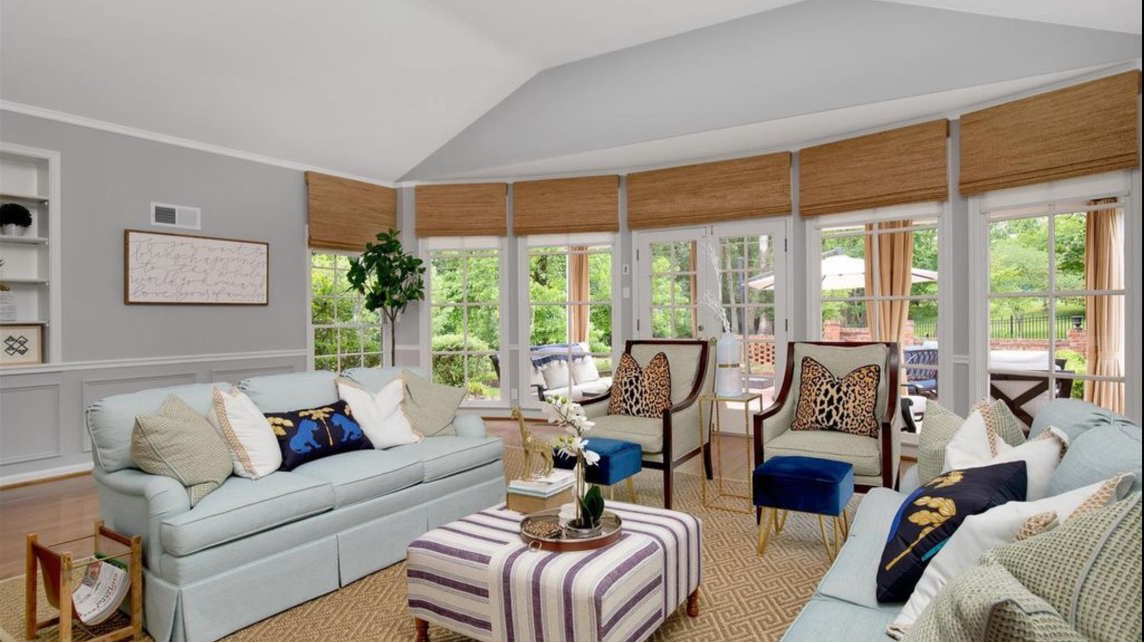
Your consultant should introduce you to all of the different elements that go into stunning window treatments:
- Drapery styles, shades, blinds, or shutters
- Fabric samples and textures
- Light‑filtering versus blackout options
- Hardware styles and finishes
Rather than focusing solely on trends, recommendations are based on how the materials will perform in your space. You'll have time to see, touch, and compare samples, and ask questions along the way.
Step Four: Budget, Timeline, and Expectations
A good consultation includes transparency. You'll discuss budget considerations, pricing ranges, and factors that influence the cost of custom window treatments (timelines for fabrication and installation are also explained).
Additionally, this is the time to clarify next steps if you choose to move forward, or to simply take time to think things over.
What You Don't Need to Worry About
Many homeowners are relieved to learn what isn't required for an in‑home consultation.
- You don't need to stage your home
- You don't need to know what style you want
- You don't need to make decisions on the spot
The consultation is about education, clarity, and confidence, not pressure.
After the Consultation: What Happens Next?
After your visit, you'll receive a recap of recommendations along with pricing or design details. You’ll have time to review everything at your own pace and ask follow‑up questions.
If you decide to move forward, installation will be scheduled, and your custom window treatments will be crafted specifically for your home. If you're not ready yet, you'll still walk away with valuable insight and direction.
A Simple First Step Toward Better Window Treatments
An in‑home window treatment consultation takes the guesswork out of the process. It’s a personalized, professional way to explore options, understand your space, and make informed decisions.
In his 50+ year career in the window treatment business, Michael Proctor has seen more interior design styles than you can count and has developed the skills and vision to know when to implement each one.
Michael has an acute sense of how to match a window treatment to the home's current aesthetic and exceed the homeowner's expectations.
Whichever interior style you like (or want to experiment with), make Michael Proctor your first call for home improvements this fall!
Contact us today to set up a consultation!